
Listen, if you’re still out here struggling with buffering icons while trying to stream 8K content or hop into a cloud gaming lobby, it is officially time to wake up because 5G networks are transforming mobile internet speed and connectivity in ways that feel like straight-up magic. We are living in 2026, where the lag that used to ruin our vibe is basically becoming a relic of the past. 5G isn’t just about faster downloads anymore; it is the backbone of our entire digital existence, powering everything from hyper-realistic AR filters to seamless remote work setups that actually function without crashing every five minutes. If you have been sleeping on the real potential of your device’s connectivity, this deep dive is going to be your ultimate glow-up for understanding why your phone feels so much faster lately.
The Speed Revolution
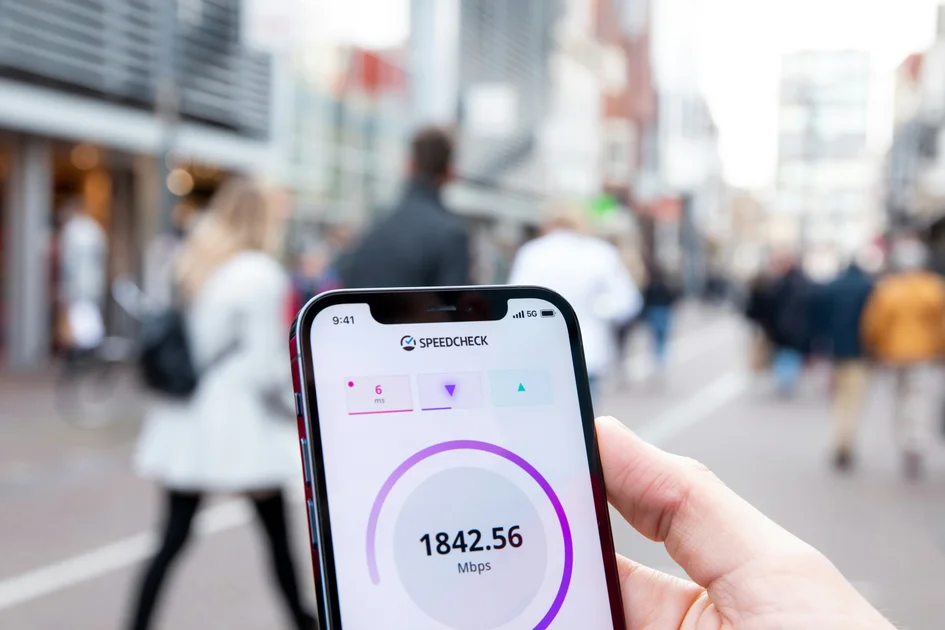
The biggest flex of the 2026 rollout is the sheer velocity of data throughput we are seeing across the board. Gone are the days when you had to camp out near a router just to download a high-res asset or a massive game update. With 5G-Advanced, we are hitting multi-gigabit speeds that make fiber-optic home connections look like dial-up. This shift is fundamentally changing how we consume media, as the time between clicking “play” and seeing high-definition video has effectively vanished. It is not just about raw speed, but the stability of that speed even when you are moving through a crowded city center or sitting in a packed stadium.
This massive jump in capacity means that high-bandwidth applications are finally viable on the go. Whether you are a content creator uploading raw 4K footage directly to the cloud or a gamer hitting ranked lobbies without dropping frames, the network infrastructure is finally catching up to our needs. We are seeing latency drop to sub-10 millisecond levels, which is a game-changer for real-time interactions. By leveraging Qualcomm’s latest modem tech, manufacturers have ensured that our devices can handle these insane data streams without turning into hand warmers. It is a total paradigm shift for mobile performance that we are finally experiencing at scale this year.
Ultra-Low Latency Gaming
If you are a gamer, you already know that ping is king. For years, mobile gaming was considered the “lite” version of the hobby, mostly because the lag made competitive shooters or fast-paced fighting games a total nightmare. That is officially over. Because 5G networks are transforming mobile internet speed and connectivity, cloud gaming platforms are now legit competitors to consoles. You can literally play AAA titles on your phone while riding the bus, and the response time is so snappy that you will forget you are even playing on a mobile device. It is honestly wild how consistent the connection is now.
This level of responsiveness is made possible by edge computing, which pushes the processing power closer to where you actually are. Instead of your data traveling across the entire country just to register a button press, the network handles it locally. This reduces the “rubber-banding” effect that used to kill your K/D ratio back in the day. Now, the experience is buttery smooth, allowing for cross-platform play that actually feels fair. When you combine this with the high refresh rate screens we have in 2026, the mobile gaming experience has leveled up to a point where it feels like you are carrying a portable pro-rig in your pocket.
The Future of AR and VR
Immersive Experiences Everywhere
We have all seen those clunky AR headsets from a few years ago, but 5G is the missing link that finally makes spatial computing usable. Because the network can handle massive amounts of data in real-time, your smart glasses can offload the heavy rendering to the cloud. This means the hardware on your face can stay lightweight and stylish instead of looking like a bulky brick. We are seeing a boom in AR shopping, interactive city guides, and social experiences that blend the digital and physical worlds seamlessly. It is truly the era of the “phygital” lifestyle, where your surroundings are always augmented by live data feeds.
This connectivity boost is also vital for virtual reality. Being tethered to a PC was the biggest barrier to entry for VR, but with high-speed mobile networks, we are seeing untethered headsets that perform just as well as their wired counterparts. Imagine walking through a park while playing a full-scale VR game that maps itself to your environment in real-time. That is the kind of stuff we are playing with in 2026. The network doesn’t stutter, the world doesn’t flicker, and you stay fully immersed in the experience. It is a total vibe shift for how we interact with technology on a daily basis.
Reddit & Expert Community Consensus
“Honestly, the jump from 4G to 5G in my area has been night and day. I used to get zero bars in my basement, but now I’m pulling 800Mbps consistently. The hype was real, but it just took the infrastructure some time to actually catch up to the marketing. Pro tip: make sure your carrier actually supports standalone 5G if you want the best ping for gaming.” — u/TechGuru_2026, Reddit r/Technology
The consensus across industry forums and expert circles is that we have finally passed the “growing pains” phase of the rollout. While early adopters in 2026 and 2024 dealt with spotty coverage and battery drain issues, the 2026 network landscape is much more mature. Experts emphasize that the integration of mmWave and mid-band spectrum has created a much more balanced experience. Users are reporting that they rarely have to toggle off their 5G anymore to save battery, which was a huge pain point in previous years. The consensus is clear: the technology has finally hit its stride, making it a reliable utility rather than just a shiny feature for spec-sheet bragging rights.
Pros and Cons Analysis
It is important to keep it 100 regarding what this tech actually does for the average person. While the benefits are massive, there are still some trade-offs to consider when you are looking at your mobile setup. Here is a breakdown of how the landscape looks in 2026.
| Feature | Pros | Cons |
|---|---|---|
| Speed | Multi-gigabit downloads | Requires high-tier data plans |
| Latency | Near-instant response times | Can be affected by physical obstacles |
| Battery Life | Efficient chipsets in 2026 | Heavy usage still drains power |
| Coverage | Widespread urban availability | Rural areas still trailing behind |
| Hardware | Advanced modem integration | Flagship phones get pricey |
The main takeaway from this table is that while the performance is stellar, you definitely pay for it in terms of plan costs and the need for newer hardware. However, for anyone living in a major city, the pros heavily outweigh the cons. The ability to pull down massive files in seconds or stream without a single hiccup is a total game-changer for productivity and entertainment alike. If you are still rocking a phone from three or four years ago, you are likely missing out on the modem efficiency that makes 5G actually usable throughout the day without killing your battery.
Connectivity Beyond Phones
5G networks are transforming mobile internet speed and connectivity for more than just our phones; we are talking about the entire Internet of Things (IoT) ecosystem. Think about smart home devices, connected cars, and even wearable health monitors that sync data to your doctor in real-time. Because the network can support so many devices at once, we are seeing a massive explosion in smart city tech. Traffic lights that adjust based on real-time flow, waste management systems that signal when they are full, and energy grids that optimize distribution—all of this is happening because of the high-density connection capacity of modern networks.
This connectivity is also reaching into the automotive space, enabling V2X (Vehicle-to-Everything) communication. Your car can now “talk” to other vehicles and infrastructure to prevent accidents and optimize routes before you even see a traffic jam. It is wild to think that a few years ago, we were just happy to have a stable signal for texting. Now, we are building an interconnected web of devices that makes our lives safer and more efficient. As we move further into 2026, the barrier between “online” and “offline” is disappearing entirely, replaced by a constant, high-speed flow of information that keeps everything running in perfect sync.
Key Takeaways
- 5G-Advanced is providing the most stable and fastest mobile speeds we have ever seen.
- Ultra-low latency is finally making cloud gaming a viable, high-quality experience.
- AR and VR are becoming more accessible thanks to cloud-based rendering capabilities.
- Battery efficiency has improved drastically with 2026-era modem technology.
- The network is now a foundation for smart cities and the broader IoT ecosystem.
- You should check if your current plan and device actually support the latest 5G standards.
Frequently Asked Questions
Is 5G really that much faster than 4G?
Yes, it is not even close. While 4G was great for social media, 5G offers the bandwidth for 8K streaming, massive file transfers, and real-time cloud computing that 4G simply cannot handle. It is a generational leap in performance.
Do I need a new phone to use 5G?
If you are using a device from before 2023, you are likely missing out on the latest modem tech and frequency bands. For the best experience in 2026, you should definitely upgrade to a model that supports modern 5G-Advanced standards.
Does 5G drain my battery faster?
Early 5G tech was definitely a battery killer, but the chips in 2026 are way more efficient. Modern phones manage power much better, so unless you are doing heavy gaming for hours, you shouldn’t notice a massive difference compared to older tech.
Is 5G coverage available everywhere?
It is excellent in cities and suburban areas, but rural coverage is still catching up. Check your carrier’s coverage map at the FCC website to see how your specific area is looking this year.
Will 5G replace my home Wi-Fi?
For many people, yes! Home 5G internet is becoming a massive trend because it is often cheaper and just as fast as traditional fiber, without the need for a technician to come install a bunch of wires in your house.
Conclusion
We are officially living in the future, and 5G networks are transforming mobile internet speed and connectivity into something that feels truly seamless. It is not just about the download speeds anymore; it is about the way our lives are becoming more connected, efficient, and immersive. Whether you are gaming, working, or just scrolling through your feed, the difference is night and day compared to where we were even just a couple of years ago. Keep your tech updated, stay connected, and enjoy the ride, because the digital world has never felt this fast or this responsive. It is a whole new vibe.